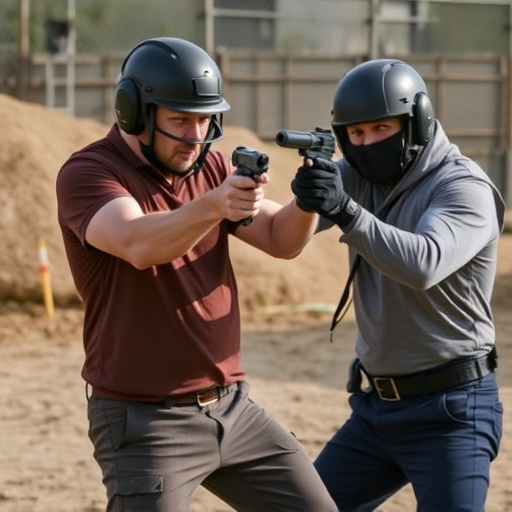
Higher pulse rates in stun guns enhance close-range power by delivering quicker and more intense bursts of electricity, overwhelming nervous systems and swiftly immobilizing targets with reduced energy dispersion, ideal for personal defense scenarios demanding speed and accuracy.
Stun guns, a popular self-defense tool, deliver powerful electrical pulses to incapacitate assailants. But what exactly is ‘pulse frequency’ and how does it affect the stun gun’s performance at close range? This article delves into the intricate details of electrical pulse frequency in stun guns. We’ll explore how different pulse rates influence their effectiveness during up-close encounters, providing insights crucial for informed decisions regarding personal safety.
- Understanding Electrical Pulse Frequency in Stun Guns
- The Impact of Pulse Rate on Stun Gun Effectiveness at Close Range
Understanding Electrical Pulse Frequency in Stun Guns
Electrical pulse frequency is a critical aspect of stun gun design, directly impacting its effectiveness and usability, especially in close-range scenarios. The frequency refers to the number of electrical pulses delivered per second, measured in Hertz (Hz). Higher frequencies typically translate to more powerful stun guns, as it allows for increased muscle contraction and disruption of nerve signals in the target.
In close-range applications, where the stun gun is used to immobilize an assailant quickly, a higher pulse frequency can deliver a more intense shock. This rapid firing of electrical pulses ensures that the stun gun’s energy is concentrated over a shorter period, making it highly effective at close distances. Thus, understanding and optimizing electrical pulse frequency is key to enhancing the close-range stun gun power.
The Impact of Pulse Rate on Stun Gun Effectiveness at Close Range

The pulse rate, or the frequency of electrical pulses emitted by a stun gun, plays a significant role in determining its effectiveness, especially at close range. A higher pulse rate generally translates to more powerful shocks, as it allows for quicker and more intense bursts of electricity. This is crucial when dealing with threats up-close, where a rapid succession of pulses can overwhelm the nervous system, rendering the target immobilized.
At closer distances, the impact of each pulse becomes more pronounced due to reduced energy dispersion. Therefore, stun guns with higher pulse rates offer increased close-range stun gun power, ensuring faster and more effective neutralization. This feature is particularly advantageous for personal defense scenarios where speed and accuracy are paramount.
Electrical pulse frequency plays a pivotal role in determining the close-range stun gun power. As we’ve seen, higher pulse rates enhance effectiveness by increasing muscle contraction and sensory disruption. However, optimal performance depends on balancing intensity with safety. Understanding the interplay between pulse frequency and other factors is key to maximizing the potency of stun guns while adhering to responsible use guidelines. When considering a stun device, investigating its specific pulse rate ensures you’re equipped for situations requiring immediate neutralization at close quarters.